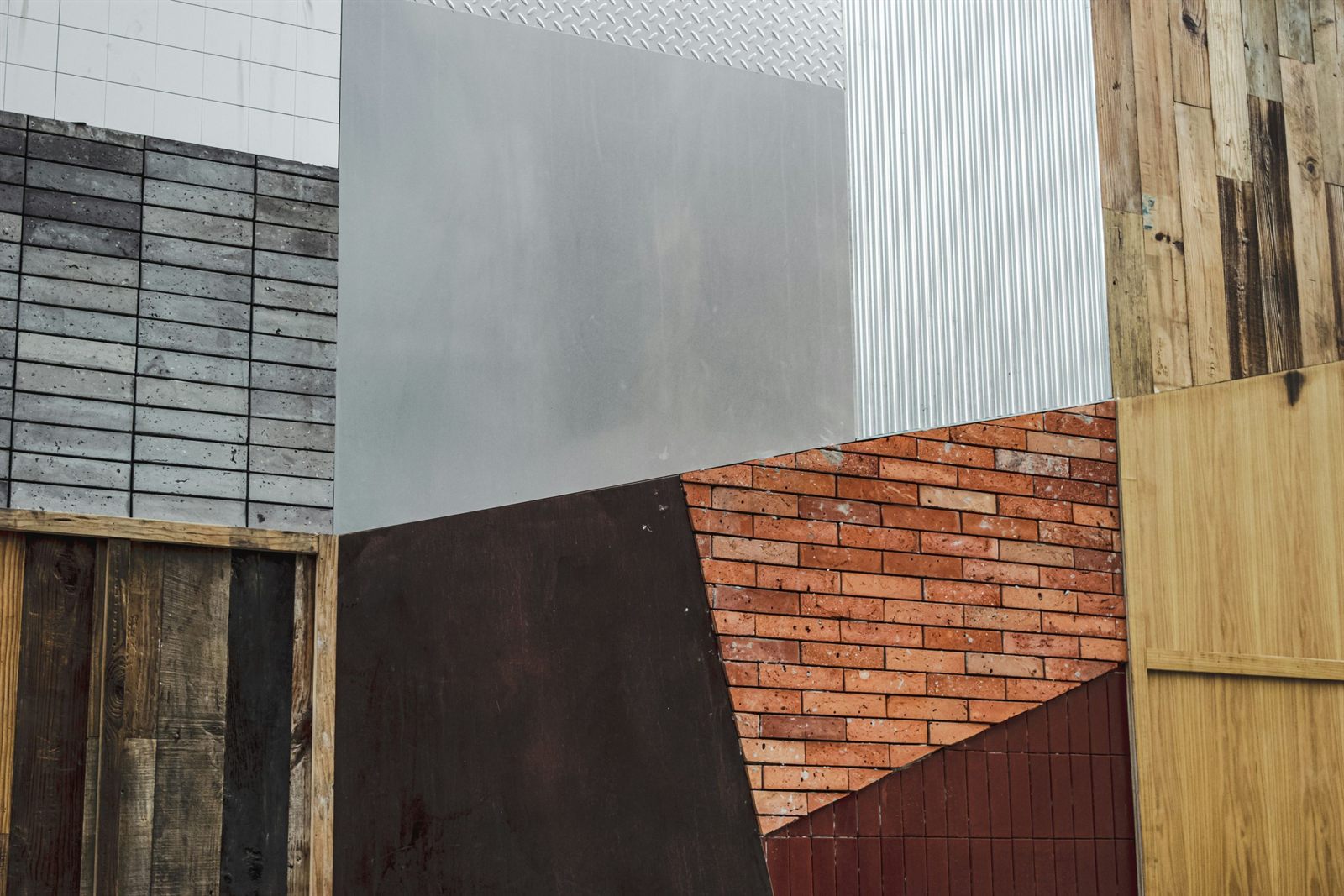
The environmental impact of construction represents one of the most significant challenges facing today's building industry. As architects increasingly embrace their responsibility as environmental stewards, innovative material solutions are emerging that promise to transform how we design and build.
This evolution in sustainable design offers architects powerful new tools to reduce carbon footprints while creating buildings that perform better, last longer, and forge deeper connections with their occupants.
The Imperative for Material Innovation
Traditional construction materials account for a staggering proportion of global carbon emissions, resource depletion, and waste generation. Concrete alone is responsible for approximately 8% of global CO2 emissions, while conventional steel production consumes enormous energy and virgin resources. These sobering statistics have catalysed a remarkable wave of research and development in sustainable alternatives.
The most promising innovations address multiple environmental challenges simultaneously. Rather than simply focusing on embodied carbon, forward-thinking manufacturers and researchers are developing materials that consider entire life cycles—from sourcing and manufacturing through installation, use, and eventual reuse or biodegradation. This holistic approach represents a fundamental shift from treating sustainability as an add-on feature to making it the core driver of material development.
Bio-Based Materials: Nature's Solutions
Some of the most exciting developments in sustainable construction come from bio-based materials that harness natural processes and renewable resources. These materials often bring the additional benefit of sequestering carbon during their growth phase, creating products with potentially negative carbon footprints.
Mycelium composites represent a particularly fascinating frontier. Derived from the root structures of mushrooms, these materials can be grown in predetermined shapes using agricultural waste as feedstock. When properly processed, mycelium creates lightweight yet strong insulation panels and structural elements with excellent acoustic properties and inherent fire resistance. Companies like Biohm in London are pioneering commercial applications, creating insulation products that outperform conventional alternatives while dramatically reducing environmental impact.
Engineered timber continues its remarkable evolution, with cross-laminated timber (CLT) and laminated veneer lumber (LVL) enabling wooden structures of unprecedented height and span. These materials leverage the natural carbon sequestration of forests while offering excellent structural performance. Recent innovations include modified wood products that achieve remarkable durability and dimensional stability without toxic treatments. Accoya and Kebony use non-toxic processes to modify cellular structures, creating timber with longevity comparable to tropical hardwoods but sourced from sustainable temperate forests.
Agricultural waste streams offer another fertile source of bio-based materials. Rice husks, wheat straw, and corn stalks can be transformed into high-performance building components, converting what was once considered waste into valuable resources. Envirocrete, for instance, incorporates agricultural residues into cementitious products, reducing both waste and the carbon footprint of traditional concrete.
Reimagining Conventional Materials
While new materials garner headlines, equally important innovations are transforming conventional construction materials to dramatically reduce their environmental impact without requiring wholesale changes to building practices.
Cement, the emissions-intensive binding agent in concrete, is being reinvented through several promising approaches. Geopolymer cements substitute industrial by-products for traditional Portland cement, reducing carbon emissions by up to 90% while maintaining similar performance characteristics. Carbon-curing technologies actively absorb CO2 during the concrete curing process, sequestering carbon while simultaneously improving the material's strength. These technologies allow concrete—historically a major carbon emitter—to potentially become a carbon sink.
Steel production is similarly being revolutionised through hydrogen reduction processes that eliminate coal from the manufacturing process. Fossil-free steel produced using renewable electricity and green hydrogen represents a game-changing development for structural frames. Meanwhile, high-percentage recycled steel is becoming increasingly available, further reducing the material's embodied carbon while maintaining essential performance characteristics.
Glass, essential for daylighting but traditionally energy-intensive to produce, has seen remarkable advances in both manufacturing processes and performance. Vacuum insulated glazing achieves triple-glazing performance in the thickness of a standard double-glazed unit, while photovoltaic glass integrates energy generation directly into building envelopes. Electrochromic glass that adjusts its tint in response to external conditions eliminates the need for additional shading devices, simplifying facades while improving energy performance.
Waste Transformation and Circular Economy
Perhaps the most profound shift in material innovation involves transforming waste streams into valuable building resources, embracing the principles of circular economy where one process's waste becomes another's raw material.
Plastic waste, a global environmental crisis, is finding new purpose through innovative processing techniques. Recycled plastic lumber offers a durable, low-maintenance alternative to timber for exterior applications, diverting waste from landfills and oceans. More sophisticated approaches include chemically recycling plastics back to their polymer precursors, enabling true circular reuse rather than downcycling.
Construction and demolition waste represents an enormous untapped resource flow. Innovative crushing and sorting technologies now enable precise separation of concrete into its component parts, allowing aggregates to be reused and even recovering cement paste for reactivation. Companies developing mobile recycling plants can process materials on-site, eliminating transportation emissions while producing high-quality recycled building components.
Industrial by-products that once required costly disposal are being revalued as valuable material inputs. Ground granulated blast furnace slag from steel production creates excellent low-carbon concrete when used as a cement replacement. Fly ash from coal power plants (though declining as coal use diminishes) continues to serve as a crucial cement substitute. These materials not only reduce waste but often improve concrete performance in terms of durability and chemical resistance.

Waste Transformation and Circular Economy
Perhaps the most profound shift in material innovation involves transforming waste streams into valuable building resources, embracing the principles of circular economy where one process's waste becomes another's raw material.
Plastic waste, a global environmental crisis, is finding new purpose through innovative processing techniques. Recycled plastic lumber offers a durable, low-maintenance alternative to timber for exterior applications, diverting waste from landfills and oceans. More sophisticated approaches include chemically recycling plastics back to their polymer precursors, enabling true circular reuse rather than downcycling.
Construction and demolition waste represents an enormous untapped resource flow. Innovative crushing and sorting technologies now enable precise separation of concrete into its component parts, allowing aggregates to be reused and even recovering cement paste for reactivation. Companies developing mobile recycling plants can process materials on-site, eliminating transportation emissions while producing high-quality recycled building components.
Industrial by-products that once required costly disposal are being revalued as valuable material inputs. Ground granulated blast furnace slag from steel production creates excellent low-carbon concrete when used as a cement replacement. Fly ash from coal power plants (though declining as coal use diminishes) continues to serve as a crucial cement substitute. These materials not only reduce waste but often improve concrete performance in terms of durability and chemical resistance.
Smart Materials and Adaptive Performance
Beyond static environmental benefits, a new generation of adaptive materials promises to improve building performance through responsive behaviour, reducing energy consumption throughout a building's operational life.
Phase change materials embedded in construction elements absorb and release thermal energy at predetermined temperature thresholds, providing passive temperature regulation that reduces heating and cooling demands. When incorporated into wall systems or ceiling panels, these materials can significantly dampen temperature swings without requiring active energy inputs.
Self-healing concretes incorporate bacteria or polymers that automatically repair small cracks as they develop, extending service life and reducing maintenance requirements. This biological approach mimics natural processes, allowing structures to recover from minor damage without human intervention.
Hygroscopic materials that naturally regulate humidity are gaining renewed attention as our understanding of healthy indoor environments evolves. Clay plasters, timber elements, and certain cellulose-based materials absorb and release moisture in response to ambient conditions, helping maintain optimal humidity levels without mechanical systems.
Implementation Challenges and Solutions
Despite their promise, many sustainable material innovations face significant barriers to widespread adoption. Understanding these challenges is essential for architects seeking to implement new solutions in their projects.
Supply chain limitations often constrain the availability of innovative materials. Many promising solutions remain in limited production, creating challenges for specification on larger projects. Forward-thinking architects are addressing this by engaging with manufacturers early in the design process, sometimes even helping develop market demand that enables scaled production.
Regulatory frameworks typically lag behind innovation, creating uncertainty around approval pathways for novel materials. Successful projects often involve early engagement with building control officials and sometimes require additional testing or performance verification. The development of Environmental Product Declarations (EPDs) and other standardised assessment methods is gradually creating clearer pathways for evaluating new materials.
Cost premiums for some sustainable innovations can present barriers, particularly when evaluated through conventional short-term financial metrics. Lifecycle cost analysis that accounts for operational savings, maintenance reduction, and longer service life often reveals that higher initial investments in better materials yield significant long-term advantages. Innovative clients increasingly recognise these benefits, particularly when architects can clearly articulate the business case for sustainable material choices.
Technical knowledge gaps among design teams and contractors can hinder proper implementation. Addressing this requires investment in continuing education and sometimes bringing specialist consultants into project teams. Many sustainable material manufacturers now offer extensive technical support, recognising that successful implementation drives market expansion.
Specification Strategies for Practicing Sustainable Architects
For architects seeking to incorporate sustainable materials into their projects, several practical approaches have proven effective across diverse project types and scales.
Material passports represent a promising framework for documenting the composition, origin, and future reuse potential of building components. By creating detailed records of installed materials, these passports facilitate eventual recovery and reuse, enhancing a project's long-term sustainability while potentially creating future asset value from materials that would otherwise become waste.
Whole-life carbon assessment, which considers both embodied and operational carbon over a building's lifespan, provides a comprehensive framework for material evaluation. This approach prevents unintended consequences where addressing one environmental impact might worsen another. Software tools increasingly automate these complex calculations, making comprehensive assessment more accessible to mainstream practice.
Pilot testing of innovative materials in controlled applications allows architects to gain experience with new solutions while managing risk. Many successful projects incorporate innovative materials in non-critical applications first, building knowledge and confidence before broader implementation. Documenting performance and sharing results contributes to industry knowledge, helping accelerate adoption of promising solutions.
Regional sourcing strategies reduce transportation impacts while supporting local economies and often leveraging traditional building approaches with inherent sustainability benefits. Understanding local material availability and craft traditions can inspire innovative architectural expressions firmly rooted in place, creating buildings with both environmental and cultural resonance.
Future Horizons
Looking ahead, several emerging trends promise to further transform sustainable materials in architecture.
Digital fabrication technologies are enabling more precise material use, reducing waste while opening new formal possibilities. Additive manufacturing (3D printing) with clay, concrete, and bioplastics allows complex geometries optimised for structural efficiency and minimal material consumption. Robotically controlled subtractive processes can achieve similar efficiency with natural materials like timber and stone.
Artificial intelligence is accelerating material innovation through computational modelling that predicts performance characteristics without exhaustive physical testing. These tools allow researchers to rapidly iterate through potential formulations, identifying promising candidates for further development while eliminating less viable options early in the process.
Biomimicry—the practice of emulating natural systems and processes—continues to inspire material innovations. From self-cleaning surfaces modelled after lotus leaves to structural systems based on bone microstructures, nature offers sophisticated templates for materials that achieve maximum performance with minimal resources. These bio-inspired approaches often yield solutions that are inherently more compatible with natural systems.
Nanotechnology enables manipulation of materials at the molecular scale, creating enhanced properties with minimal resource inputs. Nano-additives can dramatically improve the performance of conventional materials—increasing strength, reducing weight, improving durability, or adding novel functionalities like pollution capture or self-cleaning properties.
The evolution of sustainable building materials represents far more than technical advancement—it signals a fundamental shift in how we conceive the relationship between built and natural environments. Rather than opposing forces, where architectural creation necessarily depletes natural resources, emerging material innovations suggest a more harmonious future where buildings might actually regenerate natural systems.
For architects committed to environmental responsibility, these material innovations offer powerful new tools to align design aspirations with ecological imperatives. The challenge extends beyond simply specifying greener products to fundamentally rethinking design processes, construction methodologies, and even the expected lifespan and future adaptability of our buildings.
As climate challenges intensify, the architecture profession has both an opportunity and responsibility to lead through material choices that dramatically reduce environmental impacts while creating spaces that nurture human wellbeing. Through thoughtful material specification, architects can create buildings that not only minimise harm but actively contribute to environmental regeneration—turning construction from one of humanity's most environmentally damaging activities into a potential force for planetary healing.