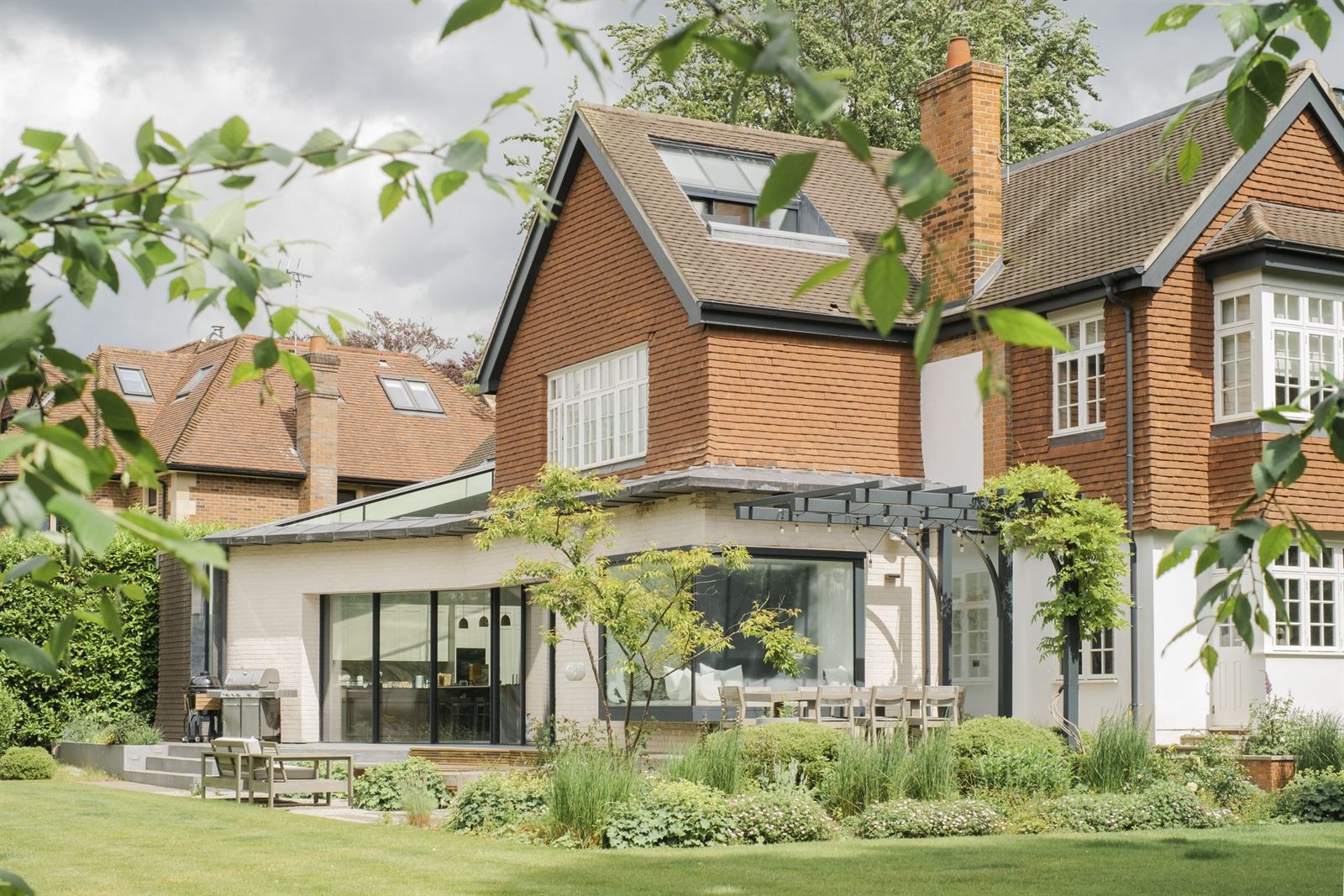
When people start thinking about extending or altering their home, the question often isn’t what they want to do, it’s which route they should take to get there.
Permitted development and planning permission are often talked about as opposites, but they’re really just two different frameworks. Choosing between them depends less on preference and more on context, ambition, and risk.
What Permitted Development Is Good For
Permitted development (PD) is designed to allow certain types of work to happen without a full planning application. In the right setting, it can be a practical and efficient option.
PD tends to work best when:
-
The property is a typical house
-
There are no special designations in place
-
The proposal is relatively standard
-
Speed and simplicity matter
For things like straightforward loft conversions or modest rear extensions, PD can remove a layer of process and keep projects moving.
Where Permitted Development Falls Short
What PD doesn’t do is assess quality.
It doesn’t look at:
-
How well a layout works
-
Whether spaces feel usable and comfortable
-
How the design might age over time
-
Whether the result feels proportionate to the house
It’s entirely possible to stay within PD limits and still end up with a scheme that feels compromised. PD answers a legal question, not a design one.
When Planning Permission Becomes the Better Route
Planning permission becomes more relevant as soon as context starts to matter.
This might be because:
-
The property sits in a conservation area
-
Article 4 Directions apply
-
The proposal is more ambitious
-
The relationship with neighbouring buildings is sensitive
-
Design quality is a priority
Planning allows a proposal to be assessed in relation to its surroundings, rather than against fixed allowances alone.
Allowed vs Appropriate: A Useful Distinction
A helpful way to think about the difference is this:
Permitted development asks whether something is allowed.
Planning permission asks whether it’s appropriate in that place.
Neither approach is inherently better. They simply answer different questions and the right question depends on the situation.
Certainty, Risk, and the Long View
PD can feel simpler, but it isn’t always lower risk. Rights can be misunderstood, restricted, or removed, particularly in sensitive areas.
Planning permission, while slower, can offer clarity earlier on. It creates a framework that gives homeowners more confidence before committing time and money to a scheme.
This becomes especially important when budgets are tight or when changes later on would be costly.
How to Decide Which Route Makes Sense
Choosing between PD and planning usually comes down to:
-
The property’s context
-
The level of complexity involved
-
How important design quality is
-
How much certainty you want early on
If the choice feels unclear, that’s often a sign that context hasn’t been fully explored yet and that’s where the decision usually needs to start.