Budget conversations around home projects are rarely just about numbers. They’re tied up with emotion, aspiration, and a fair amount of uncertainty.
It's always helpful to know whether spending more will actually be worth it, not just financially, but in terms of how a home feels to live in, how long it works for, and what it might be worth one day.
This is where budgeting often becomes less rational than it looks on paper.
How Budgets Are Commonly (Mis)Calculated
Most homeowners arrive at a budget using some version of this logic:
-
What the house was bought for
-
What similar homes sell for
-
The difference between the two
-
Minus a rough guess at costs
On paper, it feels sensible. In reality, it often falls apart.
This approach:
-
Assumes the market behaves predictably
-
Treats all improvements as equal
-
Ignores how design quality affects perception
-
Works backwards from a number rather than a brief
The result is often a budget that doesn’t align with what the project is actually trying to achieve.
What Design Quality Actually Affects
Design quality doesn’t just affect how a space looks, it affects how it works, feels, and is valued.
Good design influences:
-
How usable a home is day to day
-
How flexible it remains over time
-
How light, proportion, and flow are perceived
-
How a property stands out in a crowded market
These things are difficult to measure upfront, but they shape how people respond to a space — whether they’re living in it or viewing it for the first time.
Design quality rarely shows up neatly on a spreadsheet, but it has a lasting impact.
When Over-Investing Pays Off
There are situations where spending more than feels strictly “rational” does pay off.
This tends to happen when:
-
The property sits in a strong location
-
The surrounding market supports higher values
-
The design genuinely improves how the home is experienced
-
The outcome is clearly differentiated from comparable properties
In these cases, good design can push a property beyond typical expectations — not by adding more space alone, but by changing how that space is perceived and used.
This isn’t guaranteed, and it isn’t universal. But it’s real.
Why Return on Investment Isn’t Linear
One of the hardest things to accept is that return on investment doesn’t rise in a straight line with spend.
Doubling the budget doesn’t double the value added.
But spending less doesn’t always mean losing less either.
What matters more is where money is spent:
-
On clarity of layout
-
On proportions and light
-
On decisions that remove compromise
Well-judged design choices often have an outsized impact compared to their cost — while poorly considered spending can add very little at all.
Certainty, Risk, and the Long View
PD can feel simpler, but it isn’t always lower risk. Rights can be misunderstood, restricted, or removed, particularly in sensitive areas.
Planning permission, while slower, can offer clarity earlier on. It creates a framework that gives homeowners more confidence before committing time and money to a scheme.
This becomes especially important when budgets are tight or when changes later on would be costly.
Why Good Design Sells Differently
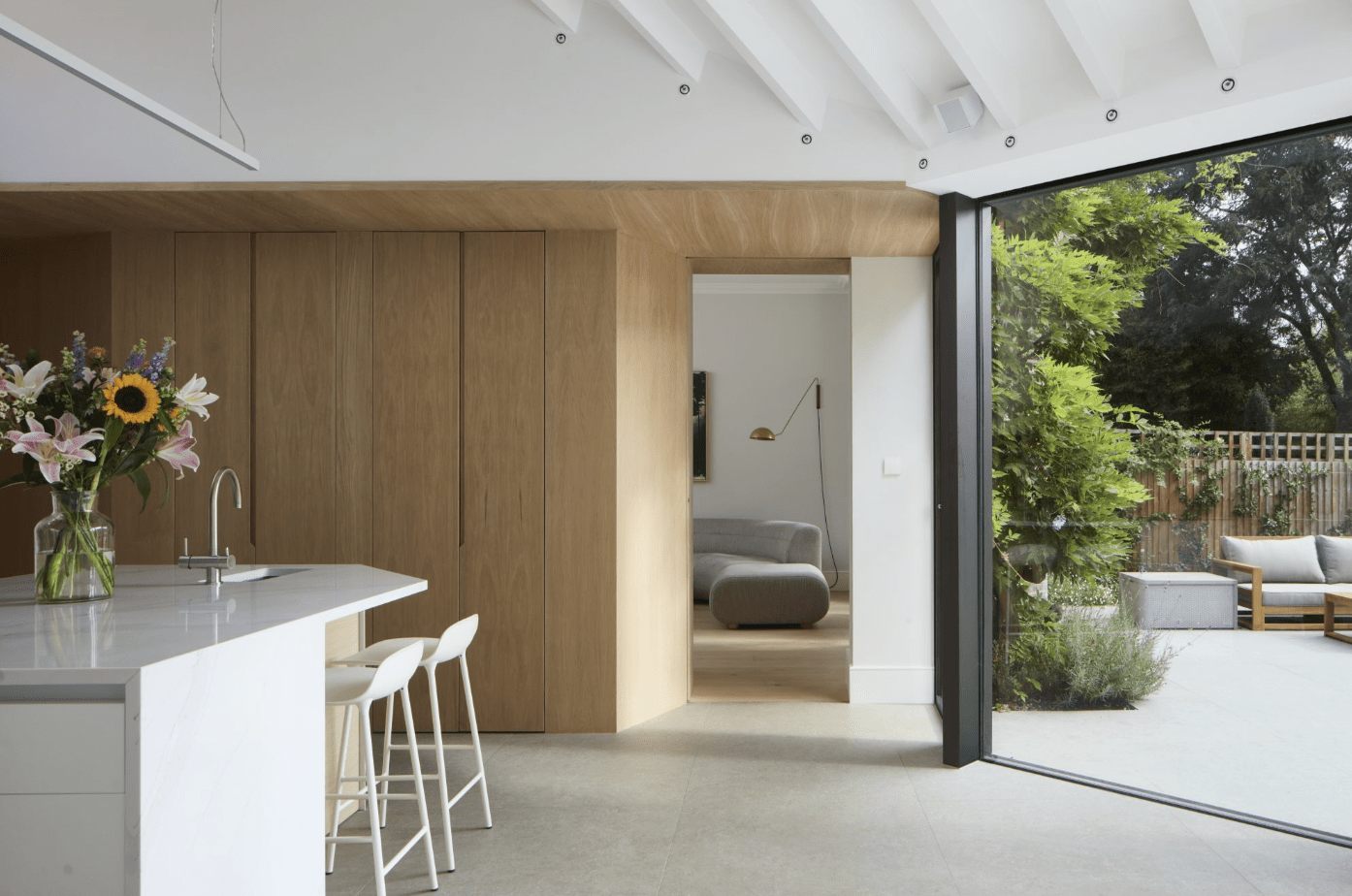
A well-designed home:
-
Feels easier to live in
-
Feels more generous, even at the same size
-
Creates confidence rather than questions
-
Encourages people to imagine themselves there
This is why two similar houses, with similar square footage, can perform very differently on the market. One feels resolved. The other doesn’t.
Design quality changes perception and perception drives value.
What Architects Can’t Reliably Predict
There are limits to what anyone can promise.
Architects cannot reliably predict:
-
Exact resale values
-
How the market will behave in future
-
Whether a design will break a price ceiling
-
How buyers will respond years down the line
What they can do is design a home that:
-
Works well for the brief
-
Is coherent and well thought through
-
Avoids unnecessary compromise
-
Has a stronger chance of long-term relevance
While good design improves the odds, it doesn’t remove uncertainty.
Making Peace With the Unknown
Budgeting well isn’t about eliminating risk. It’s about understanding where risk sits and deciding what matters most.
Before committing to a number, it helps to ask:
-
Am I solving a functional problem, or creating long-term value?
-
What compromises am I willing to live with?
-
Where would spending a bit more actually change the outcome?
-
What would I regret cutting later on?
There’s no universally “correct” budget.There is only a budget that aligns, or doesn’t, with what you want the project to do.