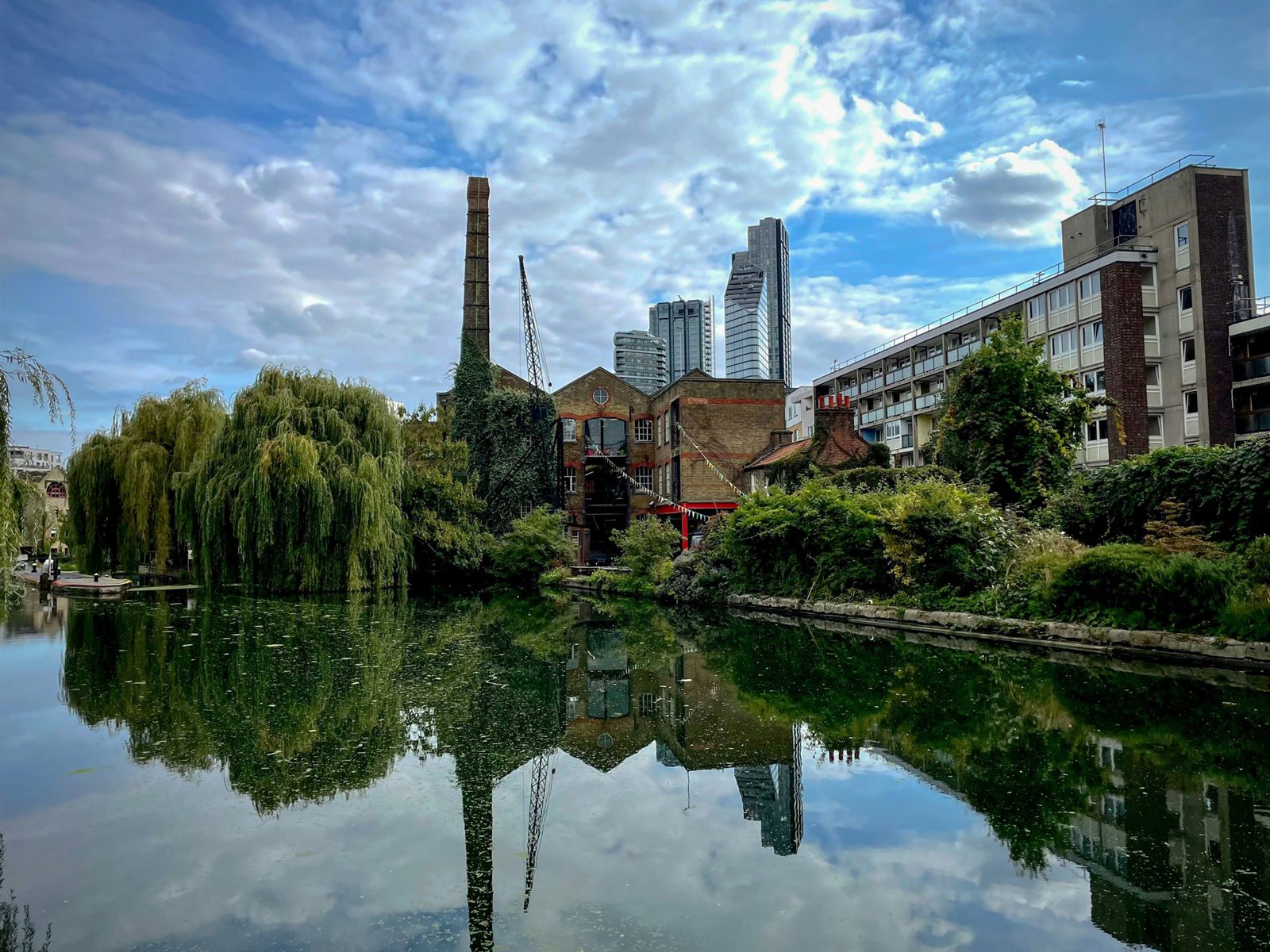
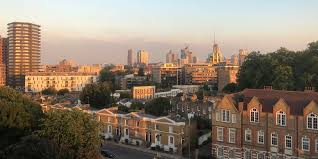
Islington, once a rural retreat for wealthy Londoners has transformed into one of London's most vibrant and architecturally diverse boroughs. This guide traces the fascinating architectural evolution of the area highlighting Islington homes that tell a story, buildings that define its character, and the hidden gems that make it truly special.
Historical Development
Rural Beginnings to Georgian Elegance
Until the early 19th century, Islington was primarily farmland dotted with country houses and gardens. The area's transformation began with the construction of the Regent's Canal in 1820, which connected Islington to the wider city and sparked its first major development phase.
The Georgian period (1714-1830) saw the emergence of elegant terraced houses along what would become Upper Street. These homes, characterised by their symmetrical facades, sash windows, and wrought iron balconies, represented London's first suburban development. The area around Canonbury Square, laid out in the 1820s, remains one of the finest examples of Georgian residential architecture in London.
Victorian Expansion
The Victorian era (1837-1901) brought dramatic change to Islington as London expanded rapidly. The arrival of the railway at King's Cross and the opening of the Metropolitan Line transformed the area from a semi-rural suburb into an integral part of the metropolis.
Victorian developers built densely packed terraced houses to accommodate the growing population. These homes featured:
- Distinctive bay windows
- Ornate architectural details
- Colorful tiled pathways
- Decorative brickwork
The grandest Victorian homes appeared along Highbury Fields and in Barnsbury, while more modest workers' cottages filled the streets near Caledonian Road. This period also saw the construction of substantial public buildings, including Islington Town Hall and many of the area's magnificent pubs.
Edwardian Refinement
The Edwardian period (1901-1914) brought further refinement to Islington's architecture. New developments featured wider, airier streets and homes with more interior space. Red brick mansion blocks appeared, providing fashionable apartment living with ornate detailing and generous proportions.
Mid-Century Transformation
World War II left its mark on Islington, with bombing creating gaps in the historic streetscape. The post-war period saw the introduction of modernist housing estates like the Marquess Estate near Essex Road, which replaced damaged Victorian terraces with concrete buildings designed according to new ideas about urban living.
Contemporary Renaissance
Since the 1960s, Islington has undergone a remarkable renaissance. Once-neglected Georgian and Victorian properties have been painstakingly restored, with their exteriors preserved while interiors have been reimagined for contemporary living. The area has become a showcase for sensitive architectural interventions, with glass extensions and thoughtful renovations breathing new life into historic structures.
Recent decades have also seen innovative new construction, particularly along the Regent's Canal, where former industrial buildings have been converted into stunning modern homes, and bold contemporary architecture has filled in gaps in the urban fabric.
Architectural Highlights
Caledonian Road
The western edge of our journey begins at Caledonian Road, named after the Caledonian Asylum for Scottish orphans that once stood nearby. The area's architecture reflects its working-class origins:
- HMP Pentonville (1842) - A formidable Victorian prison designed by Joshua Jebb in the radial plan style inspired by Bentham's Panopticon concept.
- Caledonian Road Station (1906) - A fine example of Edwardian transport architecture with its distinctive oxblood-red glazed tiles.
- Bevin Court (1954) - A modernist housing complex designed by Berthold Lubetkin, featuring a remarkable spiral staircase and distinctive cruciform layout.
The eastern section of Caledonian Road has seen significant regeneration, with former industrial buildings converted to apartments and workspaces.
King's Cross and Pentonville Road
Moving eastward, the area around King's Cross showcases dramatic architectural transformation:
- Keystone Crescent - A unique curved street forming a complete circle, with preserved Georgian homes that escaped Victorian redevelopment.
- The Regent Quarter - Victorian industrial buildings thoughtfully repurposed into offices, apartments, and commercial spaces.
- Clock Tower Buildings - Distinctive Victorian Gothic apartment buildings with ornate detailing.
Angel and Islington High Street
As we approach Angel, the architecture becomes grander and more varied:
- Angel Building (2010) - A contemporary reimagining of a 1980s office block by AHMM Architects, featuring a stunning atrium and contextual design.
- The Screen on the Green - An Art Deco cinema frontage from 1913, one of London's oldest continuously operating cinemas.
- Islington Town Hall (1923) - A neoclassical civic building with Portland stone facade and imposing columns.
Upper Street
The heart of Islington, Upper Street, presents a fascinating architectural timeline:
- Union Chapel (1877) - A magnificent Gothic Revival church with spectacular rose windows and unique octagonal layout.
- Islington Assembly Hall (1930) - An Art Deco entertainment venue recently restored to its former glory.
- The Almeida Theatre - A former lecture hall converted into one of London's most important theaters.
- Georgian terraces - Particularly around Canonbury Square and Islington Green, exemplifying the elegant proportions of the period.
- Business Design Centre (formerly the Royal Agricultural Hall, 1862) - A stunning Victorian exhibition hall with an iron and glass structure in the tradition of Crystal Palace, now repurposed for modern use.
Residential Architecture: Homes Through the Ages
Georgian Properties (1714-1830)
Georgian homes in Islington showcase classical proportions with strict symmetry, typically constructed of brick often faced with stucco. Their facades feature tall sash windows that gradually decrease in size on upper floors, complemented by decorative fanlights positioned elegantly over front doors.
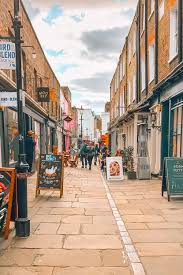
Wrought iron railings and balconies add refined detail to these stately homes. Inside, simple, elegant interiors boast marble fireplaces and delicate plasterwork that epitomize the restrained luxury of the period. Prime examples of Georgian residential architecture can be found around Canonbury Square, Duncan Terrace, and Camden Passage, where walking these streets feels like stepping back into early 19th century London.
Victorian Properties (1837-1901)
Victorian homes introduced greater variety and ornamentation to Islington's streetscapes. These properties are immediately recognisable by their distinctive bay windows, often extending across multiple floors, and ornate decorative details including intricate patterned brickwork.
Step inside a Victorian Islington home and you'll likely find colourful tiled hallways and paths leading to interiors with impressively high ceilings adorned with elaborate cornicing. These homes typically appear in terraced arrangements with shared architectural features creating unified rows along streets.
Inside, dark wood finishes and richly patterned wallpapers reflect the Victorian taste for opulence and detail. Excellent examples of Victorian residential architecture can be seen throughout Barnsbury, surrounding Highbury Fields, and within the Milner Square conservation area, where the ambition and prosperity of 19th century London is preserved in brick and stone.
Edwardian Properties (1901-1914)
Edwardian homes in Islington combined Victorian solidity with lighter, more airy touches. Typically constructed of warm red brick accented with crisp white stone detailing, these houses feature wider frontages and more generous room sizes than their Victorian predecessors.
Many display Arts and Crafts influences in their detailing, reflecting the movement away from mass production toward craftsmanship and quality. Interiors became simpler and airier, moving away from the cluttered aesthetic of the Victorian era. Edwardian developers also paid greater attention to outdoor space, providing larger gardens and more thoughtful landscaping. Beautiful examples of Edwardian residential architecture can be found around Highbury New Park and throughout parts of Canonbury, where these homes reflect the optimism and refinement of early 20th century design.
Mansion Blocks (Late Victorian/Edwardian)
Late Victorian and Edwardian eras saw the introduction of mansion blocks to Islington – substantial purpose-built apartment buildings that offered a new way of urban living. These impressive red brick buildings feature ornate entrances leading to apartments with high ceilings and surprisingly generous proportions. Residents of these early apartment buildings often enjoyed shared gardens and communal facilities, creating a sense of community within a single structure. Architecturally, many mansion blocks are distinguished by decorative elements like turrets, gables, and ornamental stonework that add character to Islington's streetscapes. Fine examples include the impressive buildings at Highbury Quadrant and along Highbury Grove, where these grand structures continue to provide desirable homes more than a century after their construction.
Contemporary Interventions
Today's architectural additions to Islington seamlessly blend innovation with respect for history. Modern homes and renovations often incorporate expansive glass extensions to period properties, flooding historic interiors with natural light while maintaining original facades. Sensitive basement conversions have become a signature approach to expanding living space in the borough, allowing historic exteriors to remain untouched while dramatically increasing usable interior space. Adaptive reuse has given new life to Islington's industrial and commercial buildings, transforming everything from old pubs to factories into unique contemporary homes.
Sustainable features are increasingly integrated into historic structures, bringing eco-friendly technology to buildings constructed long before such considerations existed. Architects working in the area have become experts in developing creative solutions for tight urban plots, maximising space while respecting neighbourhood context. Many award-winning examples of these contemporary interventions can be found throughout the borough, particularly along the Regent's Canal, where industrial heritage meets cutting-edge design.
Residential Architecture: Homes Through the Ages
Georgian Properties (1714-1830)
Georgian homes in Islington showcase classical proportions with strict symmetry, typically constructed of brick often faced with stucco. Their facades feature tall sash windows that gradually decrease in size on upper floors, complemented by decorative fanlights positioned elegantly over front doors.
Wrought iron railings and balconies add refined detail to these stately homes. Inside, simple, elegant interiors boast marble fireplaces and delicate plasterwork that epitomize the restrained luxury of the period. Prime examples of Georgian residential architecture can be found around Canonbury Square, Duncan Terrace, and Camden Passage, where walking these streets feels like stepping back into early 19th century London.
Victorian Properties (1837-1901)
Victorian homes introduced greater variety and ornamentation to Islington's streetscapes. These properties are immediately recognisable by their distinctive bay windows, often extending across multiple floors, and ornate decorative details including intricate patterned brickwork.
Step inside a Victorian Islington home and you'll likely find colourful tiled hallways and paths leading to interiors with impressively high ceilings adorned with elaborate cornicing. These homes typically appear in terraced arrangements with shared architectural features creating unified rows along streets.
Inside, dark wood finishes and richly patterned wallpapers reflect the Victorian taste for opulence and detail. Excellent examples of Victorian residential architecture can be seen throughout Barnsbury, surrounding Highbury Fields, and within the Milner Square conservation area, where the ambition and prosperity of 19th century London is preserved in brick and stone.
Edwardian Properties (1901-1914)
Edwardian homes in Islington combined Victorian solidity with lighter, more airy touches. Typically constructed of warm red brick accented with crisp white stone detailing, these houses feature wider frontages and more generous room sizes than their Victorian predecessors.
Many display Arts and Crafts influences in their detailing, reflecting the movement away from mass production toward craftsmanship and quality. Interiors became simpler and airier, moving away from the cluttered aesthetic of the Victorian era. Edwardian developers also paid greater attention to outdoor space, providing larger gardens and more thoughtful landscaping. Beautiful examples of Edwardian residential architecture can be found around Highbury New Park and throughout parts of Canonbury, where these homes reflect the optimism and refinement of early 20th century design.
Mansion Blocks (Late Victorian/Edwardian)
Late Victorian and Edwardian eras saw the introduction of mansion blocks to Islington – substantial purpose-built apartment buildings that offered a new way of urban living. These impressive red brick buildings feature ornate entrances leading to apartments with high ceilings and surprisingly generous proportions. Residents of these early apartment buildings often enjoyed shared gardens and communal facilities, creating a sense of community within a single structure. Architecturally, many mansion blocks are distinguished by decorative elements like turrets, gables, and ornamental stonework that add character to Islington's streetscapes. Fine examples include the impressive buildings at Highbury Quadrant and along Highbury Grove, where these grand structures continue to provide desirable homes more than a century after their construction.
Contemporary Interventions
Today's architectural additions to Islington seamlessly blend innovation with respect for history. Modern homes and renovations often incorporate expansive glass extensions to period properties, flooding historic interiors with natural light while maintaining original facades. Sensitive basement conversions have become a signature approach to expanding living space in the borough, allowing historic exteriors to remain untouched while dramatically increasing usable interior space. Adaptive reuse has given new life to Islington's industrial and commercial buildings, transforming everything from old pubs to factories into unique contemporary homes.
Sustainable features are increasingly integrated into historic structures, bringing eco-friendly technology to buildings constructed long before such considerations existed. Architects working in the area have become experts in developing creative solutions for tight urban plots, maximising space while respecting neighbourhood context. Many award-winning examples of these contemporary interventions can be found throughout the borough, particularly along the Regent's Canal, where industrial heritage meets cutting-edge design.
Contemporary Architectural Practice in Islington
Today, Islington represents one of London's most interesting areas for architectural practices like ourselves at Scenario, particularly in the residential sector. Architects working in the borough must navigate:
- Strict conservation guidelines protecting historic structures
- Creative approaches to expanding living space while preserving heritage
- Sustainability requirements for both new and renovated buildings
- The challenge of creating contemporary designs that complement historic contexts
The borough has become known for glass rear extensions that create light-filled living spaces while preserving historic frontages, innovative use of small urban plots, and the sensitive adaptive reuse of buildings from pubs to industrial structures.
Islington presents a remarkable architectural journey through time. Each street reveals layers of London's development, from Georgian elegance to Victorian ambition, Edwardian refinement to contemporary innovation. What makes the area truly special is not just the preservation of its architectural heritage but the thoughtful way this heritage has been adapted and enhanced for modern living.
For anyone interested in London's architectural evolution, Islington offers an unparalleled opportunity to see the city's history written in brick, stone, and glass – a living museum of urban development that continues to evolve while honouring its past.
Contemporary Architectural Practice in Islington
Today, Islington represents one of London's most interesting areas for architectural practices like ourselves at Scenario, particularly in the residential sector. Architects working in the borough must navigate:
- Strict conservation guidelines protecting historic structures
- Creative approaches to expanding living space while preserving heritage
- Sustainability requirements for both new and renovated buildings
- The challenge of creating contemporary designs that complement historic contexts
The borough has become known for glass rear extensions that create light-filled living spaces while preserving historic frontages, innovative use of small urban plots, and the sensitive adaptive reuse of buildings from pubs to industrial structures.
Islington presents a remarkable architectural journey through time. Each street reveals layers of London's development, from Georgian elegance to Victorian ambition, Edwardian refinement to contemporary innovation. What makes the area truly special is not just the preservation of its architectural heritage but the thoughtful way this heritage has been adapted and enhanced for modern living.
For anyone interested in London's architectural evolution, Islington offers an unparalleled opportunity to see the city's history written in brick, stone, and glass – a living museum of urban development that continues to evolve while honouring its past.