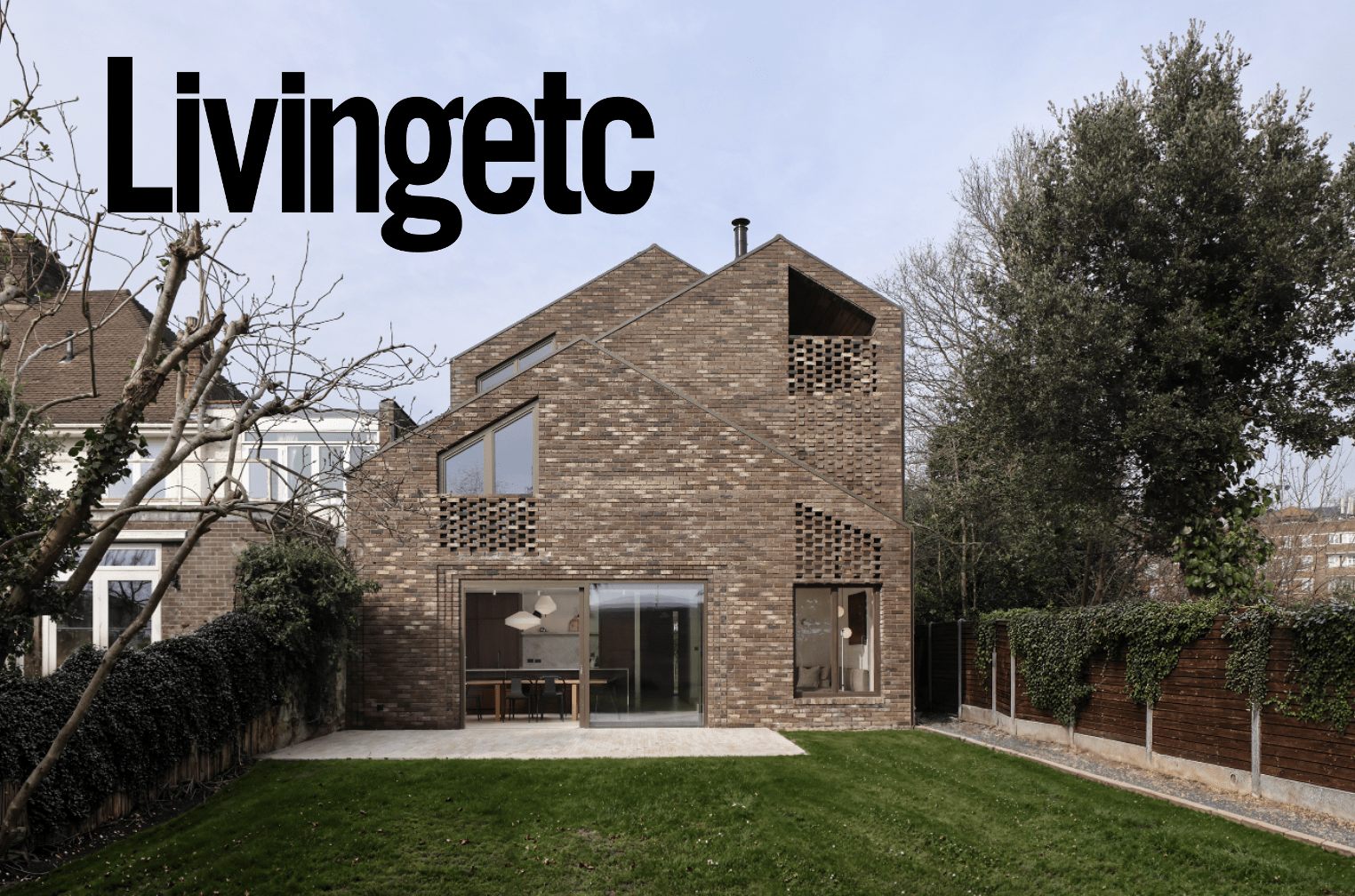
This week, our landmark project Scenario Home featured on Livingetc.
Click here to read the full article on Livingetc
large_first
Scenario Home: Featured in LivingETC
The article explores how the design evolved from an in-depth analysis of the clients’ daily routines, using Scenario’s scenario-led methodology to shape the layout and flow of the house.
Understanding Everyday Patterns
The feature highlights how the design process began with mapping out everyday activities, from morning rituals to movement between rooms. This approach informed decisions about the positioning of key spaces, light sources and storage, ensuring the home supported the residents’ habits and needs.
Emphasis on Flow, Light and Practicality
Livingetc describes the home as calm, bright and highly functional, with curved walls, open sightlines and extensive built-in storage. Large windows maximise natural light, and the layout encourages a smooth transition between social areas and quieter corners.
Responding to the Local Context
According to the article, the house draws on cues from the surrounding Dulwich streetscape, incorporating pitched roofs and warm materials in a contemporary way that fits sensitively into its setting.
Everyday Luxury Through Thoughtful Details
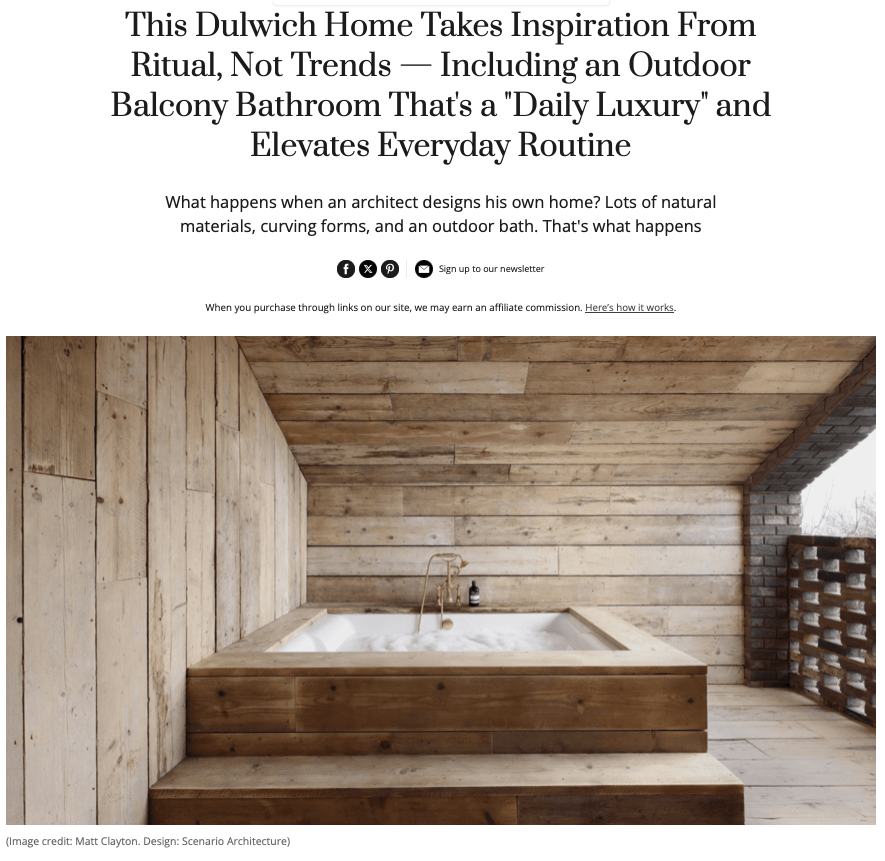
One of the most distinctive elements featured is the cedar-clad outdoor bathroom adjoining the main bedroom, designed to offer a quiet retreat. Other practical features, such as a boot room and dog-wash area, are also mentioned as examples of the home’s functional yet considered detailing.
Sustainability as a Core Principle
The feature outlines the home’s sustainability strategy, including solar panels, all-electric systems, and the use of natural materials. Passive design principles were applied throughout to reduce energy consumption and ensure long-term efficiency.
Designing as Both Architect and Client
Livingetc notes the unique dynamic of the project being designed by the homeowners themselves, who are architects. This dual role allowed them to follow their methodology closely; from initial interviews to digital modelling and iterative testing, while experiencing the process from a client’s perspective.