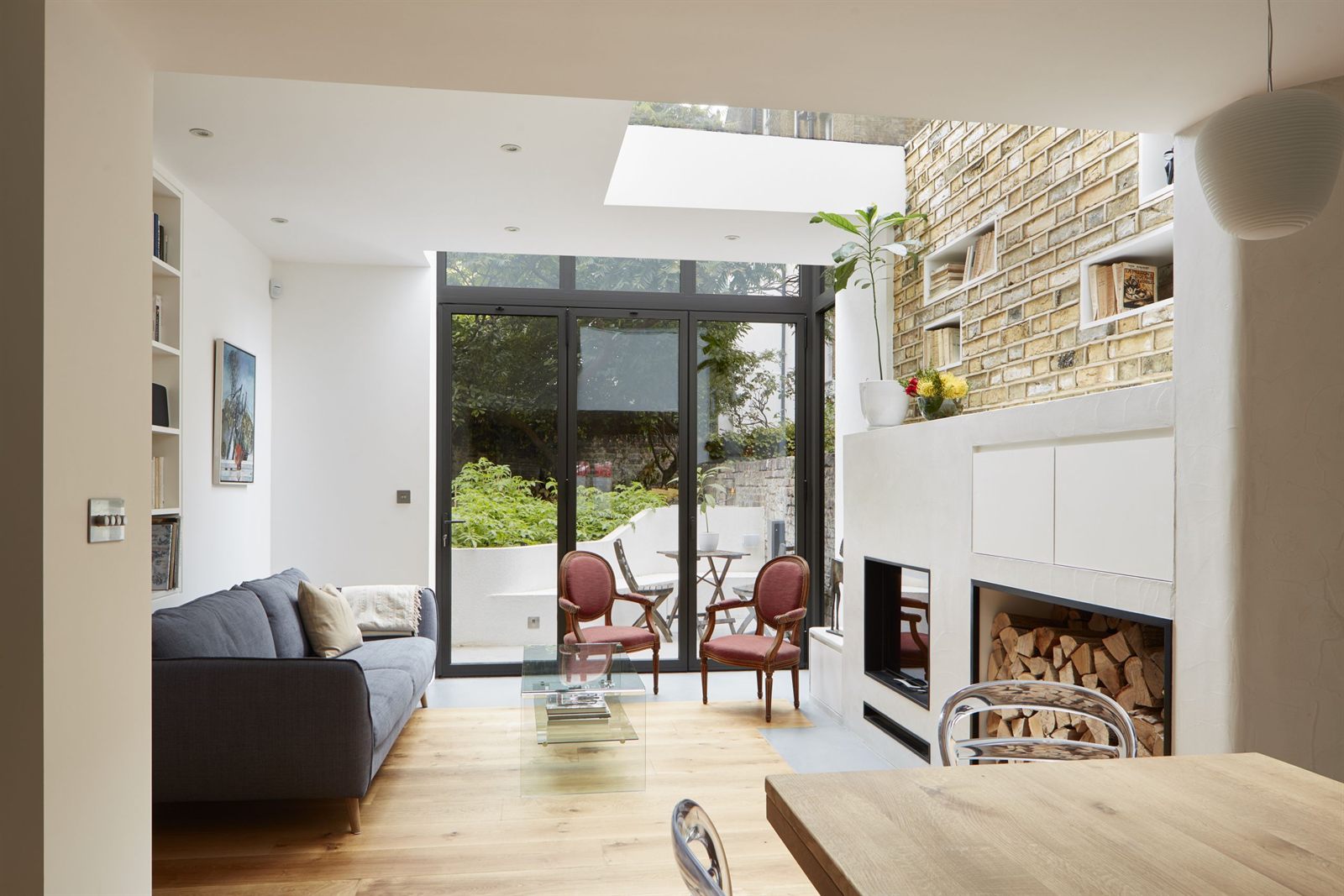
When renovating a heritage or period home, striking the right balance between contemporary elements and traditional accents can ensure a home that is uniquely timeless and best suited to your lifestyle. Your period home is a backdrop, with your life taking centre stage.
Modernising this kind of property is all about making your life functional, practical, and comfortable whilst retaining character. Your lifestyle should be reflected through your space and your home’s classic features should be embraced and enhanced as a result.
Architects and interior designers can seamlessly integrate your lifestyle and necessities by reflecting your requirements and aspirations through design and expertise. Some of the key starting points to take into consideration if you are thinking of modernising your period home are emphasising classical features by giving them a contemporary twist, selecting the right materials, and thoughtful space planning.
large_first
Classic-Contemporary Features
In Victorian, Edwardian, and Georgian homes, fireplaces were a pillar for both functionality and design aesthetics. Fireplaces could keep families warm during harsh winters and served a purpose for preparing meals. They were also seen as an excess of ornament, an element of flare. Today, having a fireplace
represents added comfort and a touch of vitality. It can also be a sustainable way of efficiently heating your home without using energy supplies. Putting a contemporary twist on a traditional concept can add interest and elegance to your period home.
A fireplace is predominantly a visual focal point that enhances design or a place where you and your family can gather around. One way to modernise a traditional concept would be to integrate a double-sided fireplace that sits between a chimney breast. This has the ability to connect two spaces at the same time and ensures there is a different atmosphere to each part of the house. Not to mention, the heat energy flow is then distributed more efficiently.
Traditionally, the fireplace was positioned in the sitting room so to add another contemporary twist, you can position a modern built-in fireplace for those in-between spaces such as an open hallway that connects one room to the other.
Quality Materials
The sturdy heritage home and its stunning framework require quality building materials
to enhance its original façade and warrant no damage to the structure. If the right materials are not selected, your period home risks the overall quality to lessen. Additionally, because of its historic nature, when renovating or reconfiguring your home, it must be taken with great care to avoid its infrastructure deteriorating.
In order to avoid this, your architect and interior designer can advise on materials that are most suitable for your project. Functionality, durability, and safety are dictated by the material being used, so using top-quality materials is a must.
Top-quality building materials tend to last longer than low-quality materials which can easily break or crack and therefore pose a risk to its architectural design. Top-quality materials also guarantee better results, greater performance, and the ability to withstand potentially adverse environmental conditions. Furthermore, selecting sustainable and eco-friendly materials can preserve and protect our environment and promote a structure’s functionality and well-being.
Space Planning
Historically, heritage homes constituted of compartmentalised rooms and each room served its own individual purpose. Today, the notion of open-plan or broken-plan is widely accepted and incorporated into homes.
More and more we are seeing open-plan trends where room functionality intersects with each other, such as a kitchen that is also used as a living space. With broken-plan spaces, it subtly divides open spaces through half-walls or split levels. Nevertheless, understanding how you can divide your spaces in either of these forms is a great way to bring a modern design into a traditional setting.
With open plan, it can increase the fluidity of a space and the amount of natural light that comes in, which is inherently tricky to achieve in traditional layouts. If you are one to enjoy refreshing your home by changing the furniture layout, an open plan that is void of walls can guarantee ease of this. Removing walls to achieve this modern layout should not be taken lightly as it requires great attention to detail, thought, and understanding of how this space can be completely cohesive.
Alternatively, a broken plan incorporated in a traditional home can tie together both the traditional layout with the concept of an open-plan layout by dividing the space so it is both open and light but guarantees privacy. For instance, you can have an open plan kitchen and living room conjoined, however, it is separated by glass balustrades to reduce sound and create a sense of relaxation.
Bringing together modern living into a period home is not always easy. However, with the expertise of an architect and interior designer, you can achieve the balance of incorporating your modern lifestyle into the historic appeal of your home.
Understanding how to marry the two through the impact of quality building materials, planning your space adequately, and modernising traditional features in a not-so-conventional way are all elements that marry the new with the old.
As a result, you will have a period home that exudes its natural, beautiful charm which is paired with a convenient and practical modern lifestyle.
Sustainability
Using sustainable and eco-friendly construction materials goes to a greater length in preserving and protecting our environments. These materials include earth, bamboo, metakaolin, recycled steel, linoleum, rice husk ash, fly ash, and silica fume.
The use of traditional concrete and cement results in an increase in carbon emissions, posing a threat to our environment. It is advantageous to go for reusable materials that can reduce the urge to need newer materials in the future. This guarantees a sustainable future.
Eco-friendly and quality building materials greatly achieve a structure's functionality and well-being. Getting locally available materials also reduces the shipping/transportation logistics, thus reducing carbon emissions. The reusability capacity is dependent on the fixation and installation of reusable materials.