Building a house can be an exciting and nerve-wracking experience at the same time, especially if you are a first-time homebuyer. Not only is the cost of building a new house
a key decision factor but also one of the most critical factors that can make or break the experience is the timeline for completion. The question that every homebuyer asks is, “How long does it take to build a house in the UK?”
The timeline for constructing a house can vary based on numerous factors, including the size of the property, the complexity of the design, the availability of materials and labour, and various legal and regulatory requirements.
In this blog post, we will take a closer look at the factors that affect the construction timeline and give you an estimation of how long it generally takes to build a house in the UK.
Building a house can be an exciting and nerve-wracking experience at the same time, especially if you are a first-time homebuyer. Not only is the cost of building a new house
a key decision factor but also one of the most critical factors that can make or break the experience is the timeline for completion. The question that every homebuyer asks is, “How long does it take to build a house in the UK?”
The timeline for constructing a house can vary based on numerous factors, including the size of the property, the complexity of the design, the availability of materials and labour, and various legal and regulatory requirements.
In this blog post, we will take a closer look at the factors that affect the construction timeline and give you an estimation of how long it generally takes to build a house in the UK.
large_first
The Planning and Design Stage
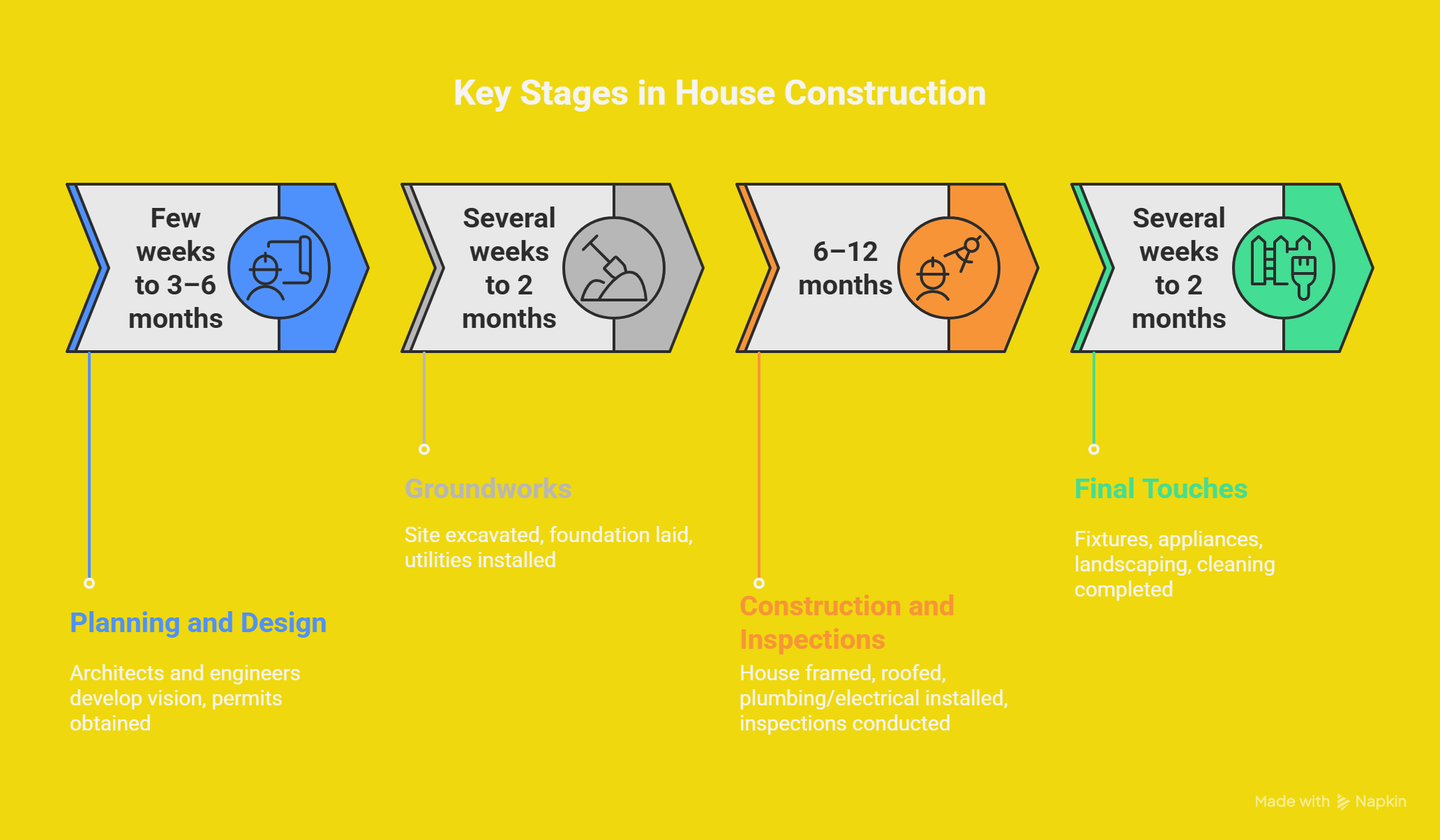
Timeline: Few weeks to 3–6 months The first stage of constructing a house involves planning, which is the foundation of any building project. During this phase, you will work with professional architects, engineers, and designers to develop your vision for the home. Whether you are buying land to build a new house or have purchased a property, it is also crucial to obtain the necessary permits and approvals from local authorities, which can take several weeks to months, depending on the complexity of the project.
The duration of this phase can vary significantly, ranging from a few weeks to several months, depending on the complexity of the project and the efficiency of the planning process.
The Groundworks Stage
Timeline: Several weeks to 2 months Once the planning stage is complete, it’s time to start preparing the ground for construction. This stage includes excavating the site, laying the foundation, and installing the necessary utilities such as water, sewer, and electrical lines. The duration of site preparation can vary based on the condition of the site and any potential delays caused by adverse weather conditions. On average, this phase may take anywhere from a few weeks to a couple of months.
For projects involving renovation, it’s important to work with experienced teams who understand the specific challenges of modifying an existing property, as in our House Renovation services.
Construction and Inspections
Timeline: 6–12 months The construction phase is where the house starts to take shape. It involves various stages, including foundation construction, framing, roofing, plumbing, electrical work, insulation, and interior finishing. The duration of the construction phase depends on the size of the property, the complexity of the design, and the availability of skilled labour and materials. On average, constructing a standard-sized house in the UK can take around 6 to 12 months. However, larger or more intricate projects might take longer.
Throughout the construction process, local authorities and building inspectors carry out regular inspections to ensure compliance with building codes and regulations. These inspections help identify any potential issues that need to be addressed. Additionally, various tests, such as structural inspections, electrical checks, and plumbing assessments, are conducted to ensure the safety and quality of the building. The duration of inspections and testing can vary, but it’s typically spread out over the construction period.
Final Touches
As the construction nears completion, attention is given to the final touches and details. This includes installing fixtures, fittings, and appliances, painting, landscaping, and conducting a thorough cleaning of the property. The duration of this phase depends on the size and complexity of the finishing work required. Generally, it can take several weeks to a couple of months to complete these final tasks.
Final Touches
Timeline: Several weeks to 2 months As the construction nears completion, attention is given to the final touches and details. This includes installing fixtures, fittings, and appliances, painting, landscaping, and conducting a thorough cleaning of the property. The duration of this phase depends on the size and complexity of the finishing work required. Generally, it can take several weeks to a couple of months to complete these final tasks.
Conclusion
Building a house in the UK is a complex process that involves multiple stages, from planning and design to site preparation, construction, inspections, and finishing touches.
The time it takes to complete a build can vary greatly depending on the size and complexity of the project, as well as site conditions, materials, and labour availability.
On average, a standard-sized home may take around 6 to 12 months, while larger or bespoke projects can take 12–18 months or more. It’s important to remember that these are general estimates, and individual projects may face unique challenges that affect the timeline. Consulting with experienced professionals and obtaining accurate estimates is crucial for managing expectations and ensuring a smooth process.
To keep your project on schedule, it is important to work with reliable traders who can guide you through each stage and provide realistic timelines. You also have to choose the right architect, as they play a key role in coordinating the design, managing approvals, and overseeing the project to ensure everything stays on track.
With the right planning, skilled traders, and a trusted architect, you can successfully build your dream home while minimising delays and disruptions.
Conclusion
Building a house in the UK is a complex process that involves multiple stages, from planning and design to site preparation, construction, inspections, and finishing touches.
The time it takes to complete a build can vary greatly depending on the size and complexity of the project, as well as site conditions, materials, and labour availability.
On average, a standard-sized home may take around 6 to 12 months, while larger or bespoke projects can take 12–18 months or more. It’s important to remember that these are general estimates, and individual projects may face unique challenges that affect the timeline. Consulting with experienced professionals and obtaining accurate estimates is crucial for managing expectations and ensuring a smooth process.
To keep your project on schedule, it is important to work with reliable traders who can guide you through each stage and provide realistic timelines. You also have to choose the right architect, as they play a key role in coordinating the design, managing approvals, and overseeing the project to ensure everything stays on track.
With the right planning, skilled traders, and a trusted architect, you can successfully build your dream home while minimising delays and disruptions.